Learn German for free: the best resources (and what comes next)
Want to learn German without spending a cent? You can get surprisingly far.

Updated on July 23, 2026
Deutsche Welle's Nicos Weg takes you from zero to B1 with free video lessons and a certificate at each level. Duolingo builds daily vocabulary habits. The Goethe-Institut offers hundreds of free practice exercises. YouTube channels like Easy German get your ear used to real spoken German. Put together, these free resources can absolutely get you started, and keep you going for months.
What they can't do as easily is get you talking. Free tools are excellent for building vocabulary and recognizing patterns, but most of them stop short of live conversation, personal feedback, and a real path to certification. If your goal is genuine fluency and not just a good foundation, it helps to know where free resources shine and exactly where they run out of road. Which is what this guide is for, alongside a look at what Lingoda's live classes add once you're ready for that next step.
Why "free" isn't always simple
Search "learn German free" and you'll find hundreds of options: apps, YouTube channels, government-funded courses, podcasts, subreddits full of recommendations. That's the good news. The bad news is that nobody tells you which ones are actually worth your time, or in what order to use them.
This guide is organized by what each resource is good for (grammar and structure, vocabulary, listening, speaking) and by level, so you can build a free study plan instead of bouncing between random links. We'll also flag, tool by tool, where each one tends to fall short.
The best free structured courses (A1–B1)
If you want one primary course to follow, these three official, free options cover you from absolute beginner through German B1.
Deutsche Welle's Nicos Weg
Start here. It's free, produced by Germany's international broadcaster with the Federal Employment Agency, and covers three full levels—A1, A2, and B1—through short video episodes with a certificate at the end of each. It's the closest thing to a guided, step-by-step curriculum you'll find for free.
Goethe-Institut
Germany's official cultural institute offers "Deutsch für dich," a free platform with over 200 exercises plus short films and vocabulary games. It won't replace a full course, but it's a reliable, official source for practice at any level.
Deutsch.info
Another solid, EU-funded option that covers A1 through B2 with a similar practice-focused approach. It’s a good backup if you want a second source of exercises alongside Nicos Weg.
Where these fall short: even the best of them, Nicos Weg, is light on active speaking practice. You'll understand a lot of German by the end of B1. Producing it out loud, under pressure, in real time, is a different skill, though. One these courses don't really train.
The best free apps
Duolingo is the app most people try first, and for good reason: it's genuinely good at building a daily habit and a solid base of vocabulary through short, gamified lessons. It's less effective for grammar explanation or speaking practice, so it works best as one part of a broader routine rather than your only resource.
Busuu's free tier adds a handful of lessons with community feedback from other learners, and Memrise leans on spaced repetition to help words stick, if you want to branch out beyond Duolingo.
Here's the honest limit: apps are built for quick, bite-sized practice, not deep explanation. German grammar, the four cases and three genders that decide how every article and adjective behaves, gets drilled through repetition rather than explained. Most learners who rely on apps alone find their progress leveling off around A2 or low B1, with plenty of recognition vocabulary but little ability to build original sentences on the fly.
Free listening and immersion
Once you have some vocabulary, immersion helps it stick. Easy German, a YouTube channel built around street interviews with German and English subtitles, is one of the most useful free listening resources out there. It's real, unscripted speech at a pace beginners can follow. For structured audio, Coffee Break German and Slow German (aimed at more advanced learners) both offer free podcast episodes that work well during a commute.
None of these teach you to speak. They're excellent for training your ear and picking up natural phrasing, but listening alone won't build the muscle memory of forming your own sentences under time pressure.
Free speaking practice
Language exchange apps like Tandem and HelloTalk connect you with native German speakers for free, informal conversation practice in exchange for helping them with your own language. It's a genuinely useful way to get real speaking reps in without paying for lessons.
The catch is consistency. You're relying on volunteers, not trained teachers, so correction is hit or miss, scheduling depends on someone else's availability, and there's no curriculum guiding what you actually practice each session.
Where free resources stop working
Add it up, and free German resources tend to hit the same four walls:
- No live feedback: nothing corrects your case endings, word order, or pronunciation in the moment.
- A predictable plateau: most self-taught learners stall around A2 or low B1, roughly the point where passive recognition outpaces active speaking.
- No consistent structure: a stack of free tools gets you started, but nobody sequences it for you or holds you accountable to a schedule.
- No certification path: free tools rarely lead to a recognized credential like the Goethe-Zertifikat, telc, or TestDaF: the kind employers, universities, and visa applications often ask for.
None of this means free resources are a bad place to start. They're a genuinely solid foundation. But if real fluency, not just a good base, is the goal, this is usually where the free route runs out of runway.
What structured live classes add
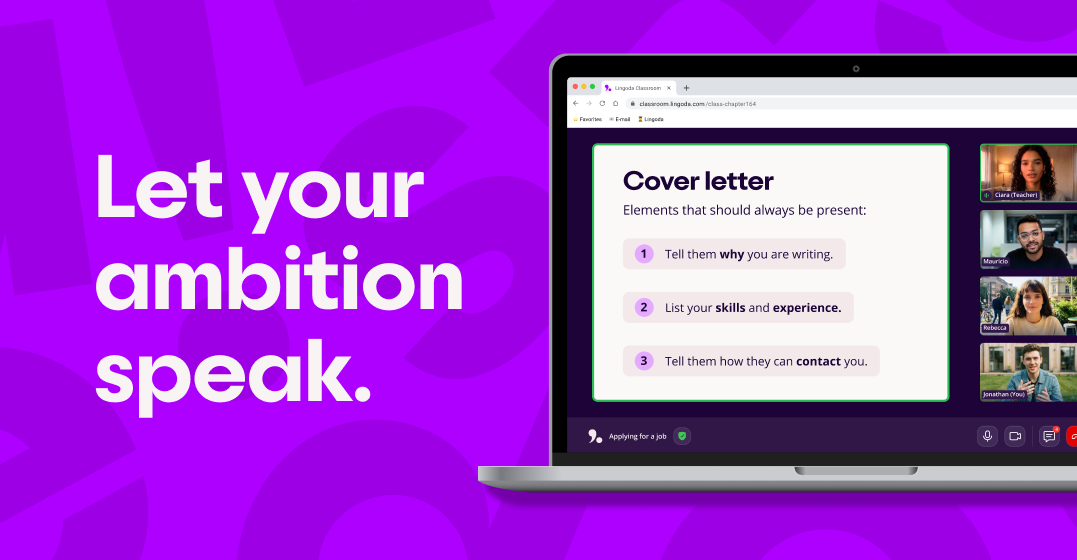
This is exactly the gap Lingoda's live online classes are built to close. Small groups, taught by certified teachers, meet in real time, so you're speaking German out loud from your very first class and getting corrected as you go. Courses follow the CEFR framework from A1 through C1, with a clear curriculum instead of a pile of links, and each level builds toward recognized certification.
If you've worked through the free resources above and hit that A2/B1 wall, structured live practice is usually what gets you speaking past it.


Ready to move past the plateau?
Try a free live German class with LingodaFAQs
It depends on how much time you put in, but the U.S. State Department's Foreign Service Institute classifies German as a Category II language, estimating around 828 class hours (about 36 weeks of full-time study) for English speakers to reach professional working proficiency. Self-paced free study will take longer, and most learners plateau around A2–B1 well before that point unless they add speaking practice.
Yes, for building a habit and core vocabulary. It's less effective for grammar explanation or speaking practice, so it works best as one part of a broader routine rather than your only resource.
Up to a point. Plenty of learners reach A2 or B1 through free resources alone. Going further, especially speaking confidently, usually requires structured feedback that self-study alone doesn't provide.
No. Adult learners pick up German successfully at any age. Consistency matters far more than age.
The best way to learn German for free and what comes next
Free resources are a genuinely good place to start learning German, and for some goals, they might be all you need. Deutsche Welle's Nicos Weg, Duolingo, the Goethe-Institut, and a language exchange app can take you further than you might expect. But if real fluency, speaking confidently and understanding native speakers in real time, is what you're after, free tools alone tend to plateau before you get there.
From your free foundation to real fluency
Explore Lingoda's German coursesValentina Rampazzo
Valentina is an Italian Content Manager who's called five different countries home and picked up five languages along the way. She's now settled in Berlin, where she works at Lingoda planning and creating content. When she's not busy dreaming up new content, you'll find her in the kitchen experimenting with plant-based recipes, planning her next trip, or losing a battle against her black cat's demands for cuddle time.