Goethe-Zertifikat: Levels, format and how to prepare


Updated on July 28, 2026
The Goethe-Zertifikat is a series of standardized German exams issued by the Goethe-Institut, Germany's official cultural institute. It covers all six CEFR levels, from A1 (beginner) to C2 (near-native), and is recognized worldwide for university admission, employment, and immigration purposes. Unlike some certificates, it never expires once you pass.
- What CEFR German level do you need?
- Goethe-Zertifikat A1: Start Deutsch 1
- Goethe-Zertifikat A2
- Goethe-Zertifikat B1: Zertifikat Deutsch
- Goethe-Zertifikat B2
- Goethe-Zertifikat C1
- Goethe-Zertifikat C2: Großes Deutsches Sprachdiplom
- How much does the Goethe-Zertifikat cost?
- How to register for the Goethe German exam
- Results, retakes, and German certificate validity
- Self-study or a structured course? How to prepare effectively
- Goethe-Zertifikat vs. other German exams
- FAQs
What CEFR German level do you need?
Every Goethe-Zertifikat level maps to a CEFR level, the six-stage scale (A1–C2) used across Europe to describe language proficiency. The Goethe-Zertifikat tests each level with a separate exam, so you choose the certificate that matches your current or target level. For a full breakdown of what each CEFR level actually means in practice, see our guide to German language levels from A1 to C2.
Goethe-Zertifikat A1: Start Deutsch 1
Who it's for: absolute beginners, typically after 80–150 hours of instruction.
At A1, you can introduce yourself, ask and answer simple personal questions, and follow slow, clear conversation.
| Module | Duration |
| Reading (Lesen) | ~20 min |
| Listening (Hören) | ~20 min |
| Writing (Schreiben) | ~20 min |
| Speaking (Sprechen) | ~15 min |
Pass mark: 60% overall. A1 is commonly required for spouse/family reunification visas to Germany.
Goethe-Zertifikat A2
Who it's for: elementary learners, typically after 150–300 hours of instruction.
At A2, you can handle everyday situations like shopping and asking for directions, and describe your background and immediate surroundings.
| Module | Duration |
| Reading | ~30 min |
| Listening | ~30 min |
| Writing | ~30 min |
| Speaking | ~15 min |
Pass mark: 60% overall. A2 is often accepted for integration-course completion and some entry-level employment.
Goethe-Zertifikat B1: Zertifikat Deutsch
Who it's for: intermediate learners, typically after 350–600 hours of instruction.
At B1, you can handle most travel situations, describe experiences and plans, and give reasons for opinions.
| Module | Duration |
| Reading | ~65 min |
| Listening | ~40 min |
| Writing | ~60 min |
| Speaking | ~15 min |
Pass mark: 60% overall, with each module scored separately — B1 and above let you retake just the module you fail, not the whole exam. B1 is the standard requirement for German citizenship and permanent residence.
Goethe-Zertifikat B2
Who it's for: upper-intermediate learners, typically after 600–800 hours of instruction.
At B2, you can understand complex texts, interact with a good degree of fluency, and produce clear, detailed writing on a range of subjects.
| Module | Duration |
| Reading | ~65 min |
| Listening | ~40 min |
| Writing | ~75 min |
| Speaking | ~15 min |
Pass mark: 60% overall. B2 is commonly required for university admission and many regulated professions.
Goethe-Zertifikat C1
Who it's for: advanced learners, typically after 800–1,000+ hours of instruction.
At C1, you can understand demanding texts, recognize implicit meaning, and express yourself fluently for academic and professional purposes.
| Module | Duration |
| Reading | ~70 min |
| Listening | ~40 min |
| Writing | ~80 min |
| Speaking | ~15 min |
Pass mark: 60% overall. C1 is typically required for competitive master's programs and senior professional roles.
Goethe-Zertifikat C2: Großes Deutsches Sprachdiplom
Who it's for: near-native speakers, typically after 1,000+ hours of instruction or extensive immersion.
At C2, you can understand virtually everything read or heard, and summarize and reconstruct information from multiple sources coherently.
| Module | Duration |
| Reading | ~80–90 min |
| Listening | ~35–40 min |
| Writing | ~80–90 min |
| Speaking | ~15 min |
Pass mark: 60% overall. C2 is the highest level, often required for teaching German at university level.
How much does the Goethe-Zertifikat cost?
Exam fees vary significantly by country and test center, not just by level. In Germany, a full exam typically runs roughly €100 (A1) to €350 (C2). In the US, pricing works differently: some centers charge a package fee (for example, around $220 for A1 or $240 for A2), while others charge a separate registration fee plus a per-module testing fee, with late-registration surcharges possible.
Because pricing isn't standardized across US test centers, always confirm current fees directly with your neares Goethe-Institut exam center before registering.
Which level of German do you need?
| Purpose | Minimum level | Learn more |
| Spouse/family reunification visa | A1 | German visa language requirements |
| Permanent residence | B1 (sometimes B2) | Permanent residency in Germany |
| German citizenship | B1 | Applying for German citizenship |
| University admission (undergraduate) | B2–C1 | — |
| University admission (master's) | C1 | — |
| Teaching German at university level | C2 | — |
How to register for the Goethe German exam
- Go to goethe.de and navigate to the exams (Prüfungen) section.
- Select your level and find a nearby test center — availability varies by country.
- Create or log into your Goethe-Institut account.
- Complete the registration form and upload a valid photo ID.
- Pay the exam fee (methods vary by center).
- You'll receive confirmation with your exam date and instructions.
Book early — popular dates, especially for B1 citizenship applicants, can fill up 4–8 weeks in advance. On exam day, bring valid photo ID and your admission confirmation; electronic devices generally aren't allowed during written modules.
Results, retakes, and German certificate validity
Results are typically available within 4–6 weeks for paper-based exams (some digital formats are faster). At B1 and above, if you fail one module, you generally only need to retake that module, not the entire exam. The Goethe-Zertifikat itself never expires — though some employers or institutions may prefer a certificate earned within the last few years, so it's worth checking with the specific institution.
Self-study or a structured course? How to prepare effectively
The Goethe-Institut publishes free official practice exams and vocabulary lists for each level — a genuinely useful starting point for self-study, especially at A1–A2.
At B1 and above, though, self-study alone gets harder. The writing and speaking modules are scored on things that are difficult to evaluate on your own: natural phrasing, appropriate register, and real conversational back-and-forth. That's where structured feedback, whether from a tutor or a course, tends to make the biggest difference in whether you actually pass.
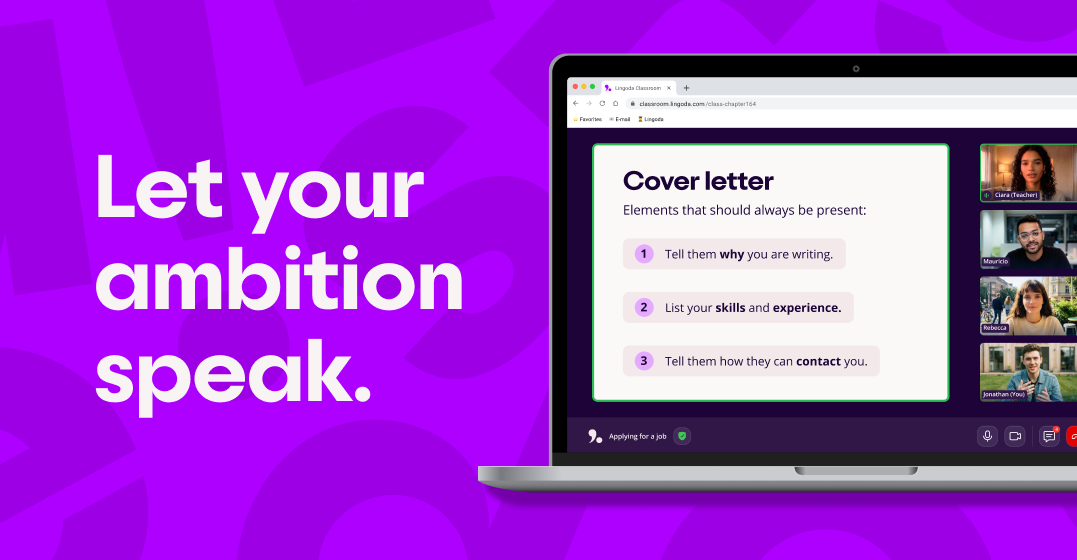
If you're weighing that decision, Lingoda's live German classes are built around the same CEFR levels the Goethe-Zertifikat tests, with native-level teachers who can give the kind of real-time correction self-study can't.
Goethe-Zertifikat vs. other German exams
The Goethe-Zertifikat isn't the only German proficiency exam — telc and TestDaF also exist, with some overlap in what they're accepted for. For a full comparison of German certification options and which one fits your situation, see our guide to German language certifications.
FAQs
Does the Goethe-Zertifikat expire?
No. It's valid for life, though some institutions may prefer a certificate earned within the last few years.
Can I take a higher level without holding the lower one first?
Yes. The exams are independent; you don't need A1 to sit B1. A placement test can help you confirm you're choosing the right level.
How many times can I retake the exam?
There's no official limit. Each attempt requires a new registration and fee.
Is the Goethe-Zertifikat accepted outside Germany?
Yes, it's recognized in Austria, Switzerland, and internationally, though exact requirements can vary
by country and purpose.
What's the difference between the Goethe-Zertifikat and telc?
Both are accepted for most German visa, residency, and citizenship purposes; see our certifications comparison for details.
Preparing for the Goethe-Zertifikat is as much about consistent practice as it is about knowing the format. If you want structured, CEFR-aligned classes with real feedback along the way, try a free class with Lingoda and see how it fits into your prep.
Learn German with Lingoda
Jessica Schnase
Jessica is the Senior Content Manager at Lingoda. Originally from Germany, she brings a well-traveled perspective to her work, having studied and lived across several countries while building her expertise in content marketing. She holds degrees in Media Studies and English Literature, and unwinds through pilates and singing in a choir.