German language levels: A1 to C2 explained

by Lingoda Team
Updated by Valentina Rampazzo on July 30, 2026
German language levels run from A1 to C2, based on the Common European Framework of Reference for Languages (CEFR). A1 and A2 cover the basics, B1 and B2 make you an independent speaker, and C1 and C2 mean you can operate almost like a native. Here's what each level means and how long it typically takes.
At Lingoda, we teach to these levels directly, with 50 classes per stage and a certificate to show for it. Below, we'll walk through what each German level actually looks like in practice, how long it typically takes to reach, and how to figure out where you are right now.
- German language levels at a glance
- What level of German is considered fluent?
- Beginner: German level A1
- Pre-intermediate: German level A2
- Intermediate: German level B1
- Upper-intermediate: German level B2
- Advanced: German level C1
- Mastery: German level C2
- Which German level do you actually need?
- FAQs
- Reach your German language level with Lingoda
German language levels at a glance
| Level | Category | What you can do | Study hours |
| A1 | Beginner | Introduce yourself, handle simple everyday exchanges | 60–150 |
| A2 | Elementary | Describe your background, manage routine errands | 150–260 |
| B1 | Intermediate | Handle travel, housing, and familiar topics independently | 260–490 |
| B2 | Upper-intermediate | Hold fluent conversations, follow complex texts | 450–600 |
| C1 | Advanced | Communicate flexibly in professional and academic settings | 600–750 |
| C2 | Mastery | Understand and express almost anything with precision | 750+ |
What level of German is considered fluent?
Most people consider B2 the point where you're fluent in German: you can hold a real conversation with a native speaker, follow the news, and handle most day-to-day and work situations without switching to English. C1 goes further, into the kind of fluency law, medicine, or academic work in German usually demands.
Beginner: German level A1
At German A1, you're building the absolute basics: greetings, numbers, and simple present-tense sentences.
- Speaking: you learn how to introduce yourself, order a coffee at a Bäckerei (bakery), and ask "Wo ist...?" (where is...?) for directions.
- Listening: you can follow slow, clearly spoken German, like a train station announcement.
- Reading: you understand short signs, menus, and simple forms.
- Writing: you can fill in a form with your name, address, and basic details.
A1 typically takes 60 to 150 hours of study. It's the level most integration courses and beginner classes in Germany start from.
Pre-intermediate: German level A2
German A2 is where you can start managing everyday errands on your own.
- Speaking: you’re able to describe your job, family, and daily routine; handle a short phone call to book an appointment.
- Listening: you understand the gist of a conversation between native speakers on a familiar topic.
- Reading: you can follow a short email from a landlord or a simple news headline.
- Writing: you can send a short, informal email or text message.
A2 generally takes 150 to 260 hours of study on top of A1. This is also the level you'll want before ordering food confidently in German.
Intermediate: German level B1
B1 is the level most people mean when they say they can "get by" in German, and it's also the minimum most Bundesländer require for a citizenship application.
- Speaking: you can handle a Wohnungsbesichtigung (apartment viewing) and ask the Vermieter (landlord) questions about the lease.
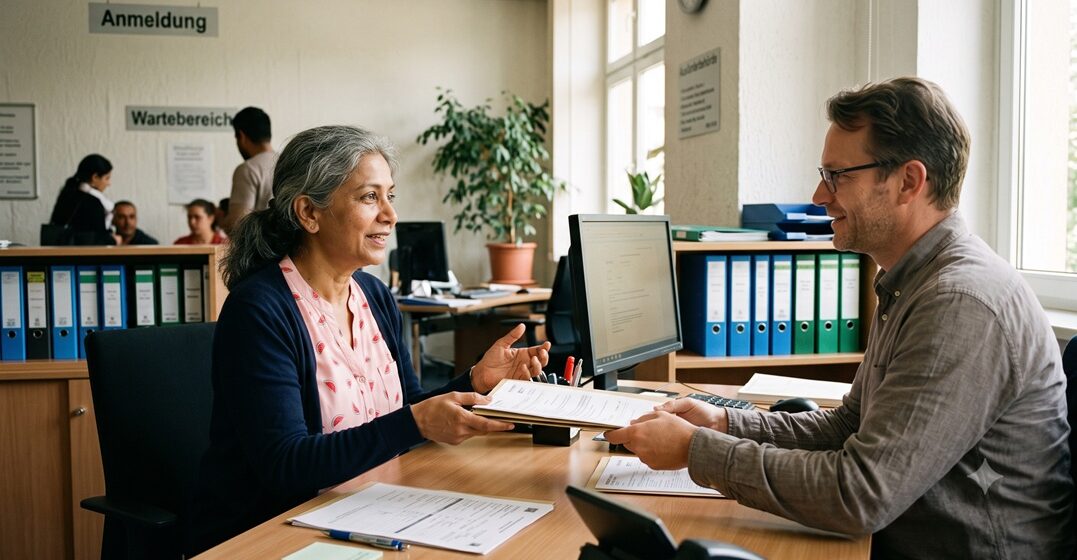
- Listening: you can follow a Bürgeramt (citizens' registration office) appointment without needing things repeated.
- Reading: you understand a rental contract's main points or a straightforward news article.
- Writing: you’re able to write a short, structured message explaining a problem, like a maintenance request to your landlord.
B1 typically takes 260 to 490 hours in total.


Explore Lingoda's B1 German course
Start closing on fluencyUpper-intermediate: German level B2
German B2 is generally the level employers mean by "fluent German," and it's usually enough for university admission too.
- Speaking: you can join a work meeting and explain your reasoning on a topic you know well, even if you occasionally hesitate on specific vocabulary.
- Listening: you’re able to follow a Betriebsrat (works council) meeting or a fast-paced conversation among colleagues.
- Reading: you understand an abstract news opinion piece or a detailed contract.
- Writing: you can write a clear, well-organized email or short report on a work topic.
B2 typically takes 450 to 600 hours in total. If you're weighing German for career reasons, what German for career growth actually requires breaks this down further.
Advanced: German level C1
C1 is where German starts feeling closer to natural, even under pressure.
- Speaking: you communicate confidently and spontaneously in professional and social settings, adjusting your tone as needed.
- Listening: you can follow a fast, technical discussion, like a legal briefing or an academic lecture.
- Reading: you understand long, complex texts, including implicit meaning and tone.
- Writing: you can draft a formal document, like a Kündigung (termination or notice letter), with the right register.
C1 typically takes 600 to 750 hours in total. It's the level most often required for demanding professional roles in law, medicine, or research. Explore Lingoda's C1 German course.
Mastery: German level C2
C2 is the top of the CEFR scale: near-native command of German.
- Speaking: you’re able to express nuance, humor, and precise meaning, even on unfamiliar or technical subjects.
- Listening: you follow rapid native speech, including regional accents and idioms.
- Reading: you understand virtually any text, from literature to dense academic writing.
- Writing: you can produce polished, precise writing on complex topics, indistinguishable from a native speaker's.
C2 usually requires 750-plus hours of study, often more. It's the level expected of German teachers, translators, and interpreters.
Which German level do you actually need?
It depends on what you're doing. Citizenship applications usually require B1. University admission typically wants B2 to C1, verified through a recognized exam. Most jobs that require German ask for B2.
FAQs
What is B1 level German?
B1 is the intermediate CEFR level. At B1, you can handle most everyday situations independently, including housing, appointments, and familiar work or travel topics, without needing a translator.
What level of German do you need for citizenship?
Most German citizenship applications require B1 German. For the specifics of the application process, see applying for German citizenship.
What level of German is required to work in Germany?
Most employers ask for B2 German, though some roles accept B1 if English is also widely used in the workplace. Our guide to German for career growth breaks this down by industry.
How do I know what level my German is?
The most reliable way is a placement test that checks your speaking, listening, reading, and writing separately, since your level can vary across the four skills. Take Lingoda's free placement test to find yours.
Reach your German language level with Lingoda
At Lingoda, we offer live classes from native-level teachers, structured around the CEFR levels above, with 50 classes per module and a certificate at the end of each one. Whatever your target level, our placement test will tell you exactly where to start.
Find your level and start learning
How Lingoda worksLingoda Team
This article was produced by one of the in-house Lingoda writers.