A1
A1Absolute beginner
Basic words and phrases
Join the language platform with built-in live classes, a proven curriculum, and app-based practice to achieve your goals.



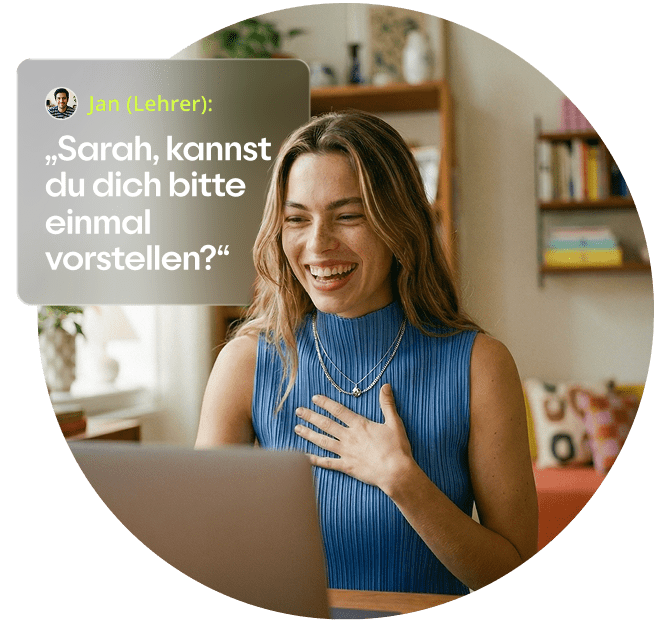
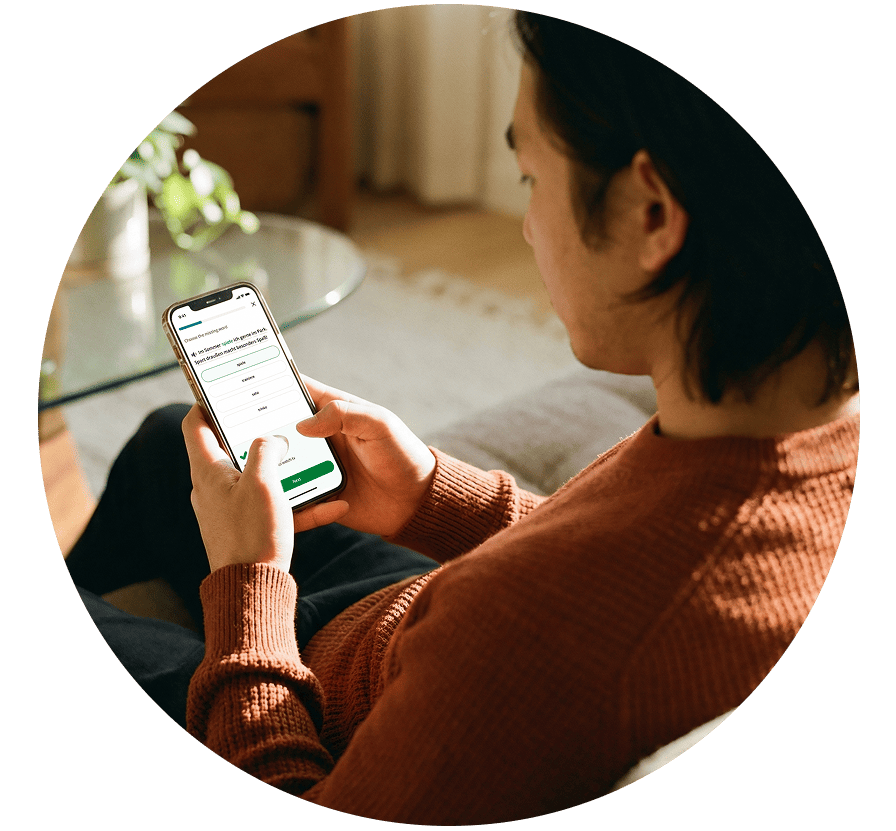
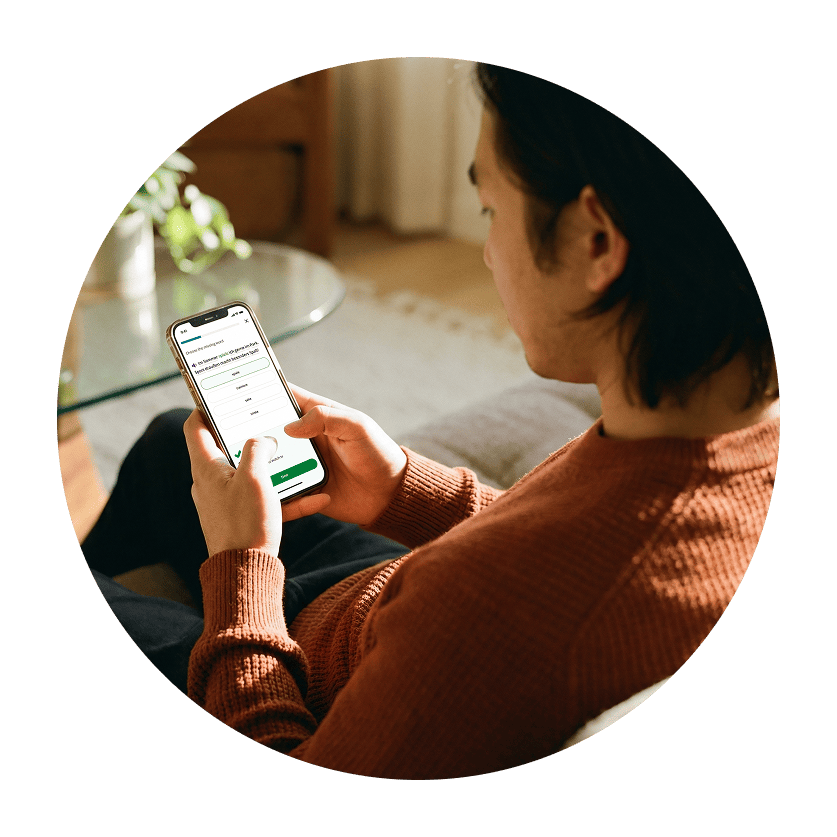
Grow your skills and opportunities with classes from beginner to advanced levels. Take our placement test to see where you fit.
Basic words and phrases
Handle simple interactions
Everyday conversations
Express complex topics
Proficient language use
About CEFR levels
At Lingoda, we use the Common European Framework of Reference for Languages (CEFR), an international standard for language learning progress. It defines six levels, from Beginner (A1) and Elementary (A2) through Intermediate (B1, B2) to Advanced (C1). Each level builds on the one before, leading toward near-native fluency.
Learn about real-world topics you can learn today and use tonight. Our certified, native-level teachers turn complex grammar into clear conversation practice — bringing cultural nuances and local flavor to every class.

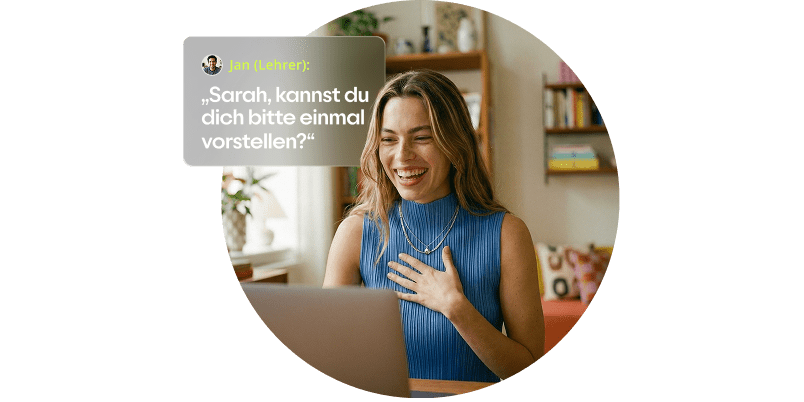
I can introduce myself, talk about my age, marital status, where I’m from, and the languages I speak.

I can talk about what I have, need, and want. I am able to recognize and use the nominative and accusative cases.

I can understand important information in an email and write a work email.

I can name the most important parts of the body and explain where it hurts.
Learners achieved their goals
Live online language classes yearly
Learners speak confidently after Lingoda classes
Average class rating from Lingoda students
Our limited-time offer on Lingoda Flex monthly plans is for new students starting their language journey. Discounts are tiered, and our smallest plan is excluded. Based on your subscription plan, you can get 5% off the M plan, 10% off the L plan, and 15% off the XL plan. The discount is applied immediately and is valid only for the first month’s purchase price. The offer cannot be combined with any other discounts or promotions and is only valid for new students.
As a Lingoda student, you can download the class materials for free and use them at any time. After your class, you will also find a quiz to help you refresh and practice your new skills. There are also downloadable exercises available. All materials are uniquely created by Lingoda experts to align with CEFR standards. If you want to learn more about CEFR, read more here.
After scheduling a German class on our platform, you will be able to join the class with 2-4 fellow students from around the world. The teacher will introduce themselves and begin teaching the lesson using learning materials that you can download at the end of class. You will be able to interact with the teacher and other students, but there is no pressure to do so. Towards the end of class, the teacher will recap the lesson and ensure everybody has understood the lesson.
Both group and private classes are very effective with Lingoda, but it depends on your personal preferences what you’d like to do.
No, we are not a language learning app. We are an online language school. And like any school, we offer live classes with certified, native-speaking teachers. At Lingoda, we believe that nothing can replace live interaction and customised feedback from a real person.
Preparing to learn with us is simple. You need three things: a stable internet connection, a computer and the free video conferencing tool Zoom.
It depends. As is the case when learning any new skill, your progress depends on your efforts. If you would like to learn German online quickly, then we suggest that you make language learning a consistent habit. Also focus and participate in class and complete the downloadable materials at the end of each class for best results. It also depends on which of Lingoda’s online German language courses you choose, as some of our plans are more intensive than others.
Learning German online is not enough? Do you want to improve you English? Then visit our English page and learn English online!
Yes — online is absolutely enough when you’re doing live speaking (not just apps) and you stay consistent. Lingoda is positioned as an online school with live classes taught by certified, native-speaking teachers, and group classes typically include 2–4 other students (max 5), which creates real conversation practice.
If your definition of “fluent” is independent and comfortable, many learners aim for B2; if you need professional-level flexibility, C1 is a stronger target — and Lingoda teaches up to C1 in German.
German can seem like an intimidating language to learn, but in reality, it’s fairly accessible.
There are concepts that English-speaking learners may find confusing, with gendered nouns serving as a good example. In English, nouns are not assigned a gender, but all German nouns are either masculine, feminine or neuter. The word for “the” also changes based on this, with “der” used for masculine nouns, “die” for feminine nouns and “das” for neuter nouns. When you learn nouns, you also need to learn the gender of the noun.
For instance, when learning the word for “table” in German, you would learn “the table” or “der Tisch”. As a result, you can determine that the German noun “Tisch” is masculine.
On the plus side, German spelling and pronunciation can actually be more intuitive and consistent than in English. With a structured German language course and quality teaching, you’ll progress quickly.
When you learn German with Lingoda, you will join online classes taught by native-level teachers. The precise way the class is organised will depend on the approach you select, and the options are as follows:
These options allow you to learn German online in a way that suits your lifestyle, schedule and preferences.
Lingoda’s German course covers the following levels:
If you’re completely new to learning German and have never taken any lessons before, you can safely jump in at A1: Absolute Beginner level and progress from there. However, if you already have some knowledge of the German language, you’ll need to know your current level so that you start learning again from the right place.
Fortunately, we’ve developed a simple placement test, which will give you an indication of your current level. Simply work through the questions, and we’ll email you your results. The test should take around five minutes. Once you have your results and know your current level, you’re ready to learn German online with Lingoda.
For most learners, it’s not vocabulary — it’s accuracy under pressure: choosing the right article/case endings and keeping German word order in longer sentences while you’re speaking in real time. The good news is these get easier fastest when you practice them in context (introductions, appointments, emails, everyday situations) and get immediate teacher feedback. Lingoda classes are built around speaking from the start and guided practice in small groups (max 5) or 1:1.
A few patterns show up again and again:
1. Learning nouns without the article (then guessing der/die/das later)
2. Over-focusing on rules but not practicing speaking (so you “know” German but can’t use it)
3. English word order transfers (especially in longer or subordinate-clause sentences)
4. Not recycling useful phrases for daily life (doctor, housing, work emails), so progress feels slow
Lingoda helps by using conversation + role-play and giving you materials and follow-up quizzes to reinforce what you used in class.
It’s possible for some learners, but it’s an ambitious goal that depends heavily on your starting level and time commitment. C1 means you can use German flexibly for social and professional purposes, not just “get by.”
A realistic way to think about it:
* If you’re already around B2, a year of consistent, intensive practice can push you to C1.
* If you’re starting from A1, C1 in a year is unlikely unless you can dedicate near-daily study and lots of live speaking.
Lingoda supports A1–C1 and offers a placement test so you can start at the right level and keep progress structured.
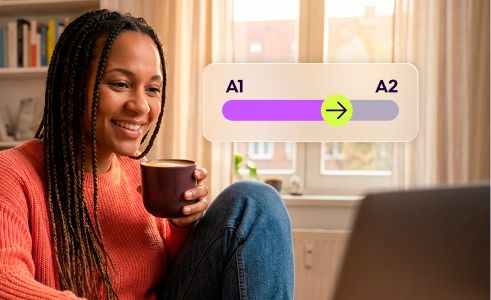
Take our quick and easy placement test