What is culture shock?
Moving abroad can be a great way to find new opportunities for work, learn a new language and try a completely new way of life.

Updated by Valentina Rampazzo on July 29, 2026
That said, living in a new and unfamiliar country is a major life change, and it can be overwhelming at first. Adjusting to your new environment takes time and effort, so it helps to know what to expect: culture shock.
We've all heard the term, but what does it actually mean? In this guide, we'll cover what causes culture shock, the stages you'll likely move through as you adjust to a new home abroad, and practical ways to make the transition easier.
What is culture shock?
There's some debate over the exact definition, and everyone experiences it a little differently, but culture shock is generally described as the disorientation and anxiety that comes with sudden immersion in a new culture.
The rapid change in environment that comes with moving abroad can leave you feeling lonely, lost, and disconnected from your roots. On top of that, you may feel overwhelmed by the sheer volume of new information and unfamiliar social norms you're navigating all at once: everything from how to greet a shopkeeper to how queuing actually works.
Culture shock isn't a sign that something is wrong with you or that you've made the wrong choice. It's a well-documented, near-universal part of adjusting to life in a new country.
Sources of culture shock
A new language
The single biggest driver of culture shock is immersion in a new language. If you don't have a strong grasp of the language before you move, the effect is usually sharper.
Not being able to understand what people are saying, read signs, or even negotiate grocery shopping can leave you feeling isolated and stressed. Even if you've learned the basics before moving, the sudden wave of real-world vocabulary can be overwhelming, especially if you're also settling into a new job or don't yet have a support network in place.
Be patient with yourself here. Picking up a new language (or a new regional dialect) takes time, and progress compounds faster than it feels like it does in the moment.
Cultural and social differences
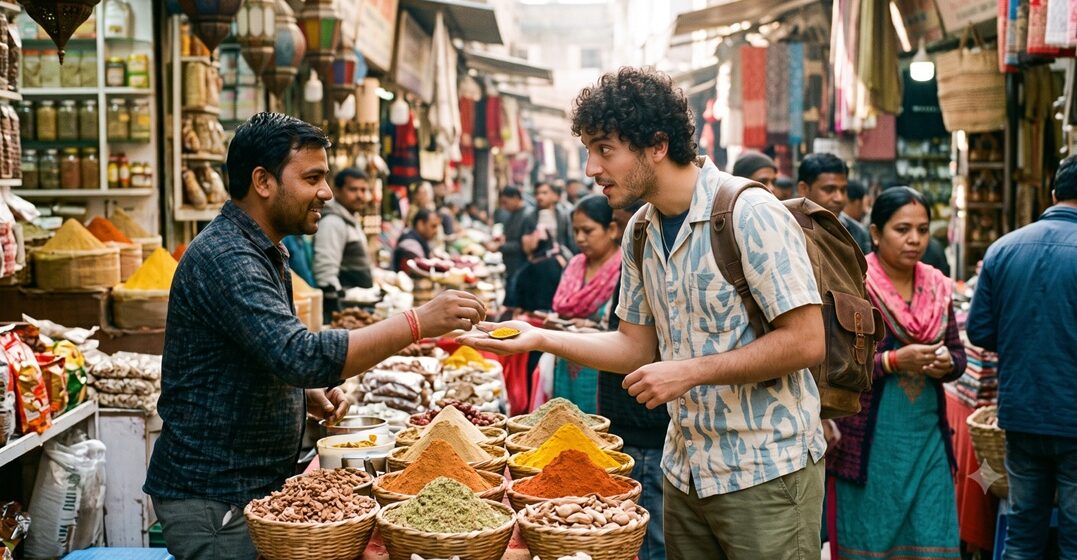
Beyond language, the everyday cultural and social differences between your home country and your new one are one of the most common sources of culture shock. These can show up as unfamiliar food and clothing, different manners and social behaviors, or entirely different social structures. Even small things—how directly people speak, how personal space works, how punctuality is treated—can catch you off guard.
Germany is a good example: many newcomers are thrown by the intensity of eye contact strangers make on the street or subway, or by how direct and to-the-point everyday communication is compared to what they're used to. None of this means the new culture is "wrong"; it just takes time and exposure to stop feeling foreign.
Doing a bit of homework before your move, even into a country where your own language is spoken, can soften the landing and help you avoid an early cultural misstep.
The four stages of culture shock
The most widely referenced model comes from anthropologist Kalervo Oberg, who first described four stages of cultural adjustment in 1960: honeymoon, negotiation (sometimes called frustration), adjustment, and adaptation.
It's worth noting this isn't always a clean, linear path. People can loop back through earlier stages, especially after a stressful event or a trip home. Think of it as a general pattern rather than a fixed timeline.
1. Honeymoon stage
The honeymoon stage usually lasts the first few weeks to a couple of months. Everything feels new and exciting—the food, the language, the pace of life—and you're likely to romanticize the differences rather than be frustrated by them.
2. Negotiation stage
Eventually the novelty wears off and the negotiation (or frustration) stage sets in. This is typically when feelings of anxiety, isolation, and homesickness are strongest. Small daily frictions—a miscommunication at the pharmacy, paperwork you don't understand, missing your usual social circle—can start to add up. This stage is often the hardest, but it's also temporary.
3. Adjustment stage
In the adjustment stage, your sense of "normal" starts to shift. Situations that once felt confusing or stressful become routine, and your new environment starts to feel more predictable.
4. Adaptation stage
By the adaptation stage (sometimes called acceptance or mastery) you've largely come to terms with your new environment and can participate in its social and cultural life without much friction. This doesn't mean giving up your home culture; it means you now have two frames of reference instead of one.
It's worth stressing how consistent this pattern is: the same broad sequence shows up across wildly different people, destinations, and reasons for moving. That consistency is exactly why the model has held up since 1960; culture shock isn't just a personal reaction, it's a fairly predictable structural response to any sudden cultural immersion.
Note: some more recent frameworks split this into five stages, typically by dividing the "adjustment" period into an initial low point (sometimes called distress or reintegration) followed by a separate stage of growing independence. The four-stage Oberg model remains the standard reference point and covers the same ground, just with adjustment treated as one continuous phase rather than two.
Coping with culture shock
A few things that consistently help, regardless of which stage you're in:
- Build routines early. Predictable daily habits (the same coffee shop, the same commute) give you an anchor while everything else feels unfamiliar.
- Invest in the language, even imperfectly. You don't need fluency to reduce isolation; being understood in basic transactions goes a long way. Structured, live classes can help you get there faster than solo study.
- Find your people. A mix of fellow expats (who get the disorientation) and locals (who can show you how things actually work) tends to work better than either group alone.
- Expect the dip. Knowing the negotiation stage is coming (and that it's temporary) makes it easier to sit with rather than panic over.
- Stay in touch with home, in moderation. Regular contact helps, but too much can pull you out of the present and slow your adjustment.
Reverse culture shock
It's less talked about, but returning home after an extended period abroad can trigger its own version of culture shock. You've changed, your old environment hasn't (or has changed in different ways), and the mismatch between expectation and reality can be surprisingly disorienting/. Sometimes more so than the original move.
The same coping tools apply: give yourself time, expect an adjustment period, and don't be surprised if home doesn't feel quite like home for a while.
FAQs
How long does culture shock last?
There's no fixed timeline, and it varies a lot by person and circumstance. As a rough guide, the honeymoon stage tends to run a few weeks to a couple of months, and the harder negotiation stage a similar stretch after that. Some people move through adjustment within several months; for others, especially with a bigger cultural or language distance to cover, it can take considerably longer. Treat any specific number you see quoted as a loose average, not a guarantee
What are the main symptoms of culture shock?
Common signs include homesickness, irritability, sleep disruption, low mood, loneliness, and a general sense of losing your footing. Physical symptoms like fatigue or stomach issues linked to a new diet or time zone aren't unusual either.
Can you experience culture shock without moving abroad permanently?
Yes: shorter stays, study-abroad programs, and even long visits can trigger a compressed version of the same stages, especially the honeymoon phase.
Does learning the local language actually reduce culture shock?
It won't eliminate it, but it directly addresses one of the biggest sources: the isolation of not understanding or being understood. Even conversational-level ability makes daily interactions less draining.
Home away from home
Culture shock can be genuinely overwhelming, but it's a normal, well-documented reaction to immersion in a new environment, not a sign you've made a mistake. Once you move through the stages, you'll start to feel right at home wherever you've chosen to plant new roots. And if language is one of your biggest sources of friction, that's the one variable you have the most direct control over.



Start learning a new language
Learn more about LingodaLeona Quigley
Leona has her roots in the South of Ireland, where she grew up on her family farm. She went on to study World Politics at Leiden University College, The Hague and then completed her MPhil in International History at Trinity College Dublin. Leona has now settled in Berlin, having fallen in love with the city. In her spare time she is working on perfecting her German in anticipation of her doctoral studies, during which she plans to study modern German social history. Her hobbies include bouldering, dancing and reading a healthy mix of history books and corny fantasy fiction. You can find more info about her on LinkedIn.