5 cultural differences between the UK and US: what feels normal in one country but rude in the other

Updated on May 4, 2026
The UK and the US may share a language, but everyday behavior can feel surprisingly different.
What seems normal in one country can come across as rude, exaggerated or even confusing in the other.
From communication style to daily habits, here are five cultural differences between the UK and the US that are useful to know — especially if you’re visiting, working or living abroad.
- Brits tend to show more reserve
- The British sense of humor tends to be darker
- Brits are less openly patriotic than Americans
- Pub culture is a real thing in Great Britain
- Driving habits are different in the US vs. UK
1. Brits tend to show more reserve
Ah, the famous British stiff upper lip! And yet, there is some truth beyond the stereotype. British people are generally less direct, less loud and less apt to wear their hearts on their sleeves than US Americans. So, you may need more time to break the ice in Great Britain. This sense of reserve also reveals itself in a number of quintessentially British attitudes and polite phrases. Hugging is much less common than in the US, and you’ll often hear British people say “Sorry!” even for the smallest peccadillo.
For a similar reason, Brits tend to be less over-the-top when giving compliments. You’re much less likely to hear a British person say that something is “awesome.” In fact, such praise may sound exaggerated (and even potentially fake) in the UK.
2. The British sense of humor tends to be darker
Humor is another area where the UK and the US can feel very different.
While Americans tend to nurture a more optimistic outlook on life, British people tend towards self-deprecation. They typically won’t hesitate to mock others and laugh at themselves in turn, highlighting the absurdities in our world along the way. It may sound nasty if you’re not used to it, but it’s simply part of the daily banter.
While Americans like a winner, British people have a thing for losers. Indeed, from John Cleese’s Basil Fawlty in Fawlty Towers to Ricky Gervais’ David Brent in The Office to Jennifer Saunders’ Edina Monsoon in Absolutely Fabulous, many British comic characters are the opposite of successful people.
3. Brits are less openly patriotic than Americans
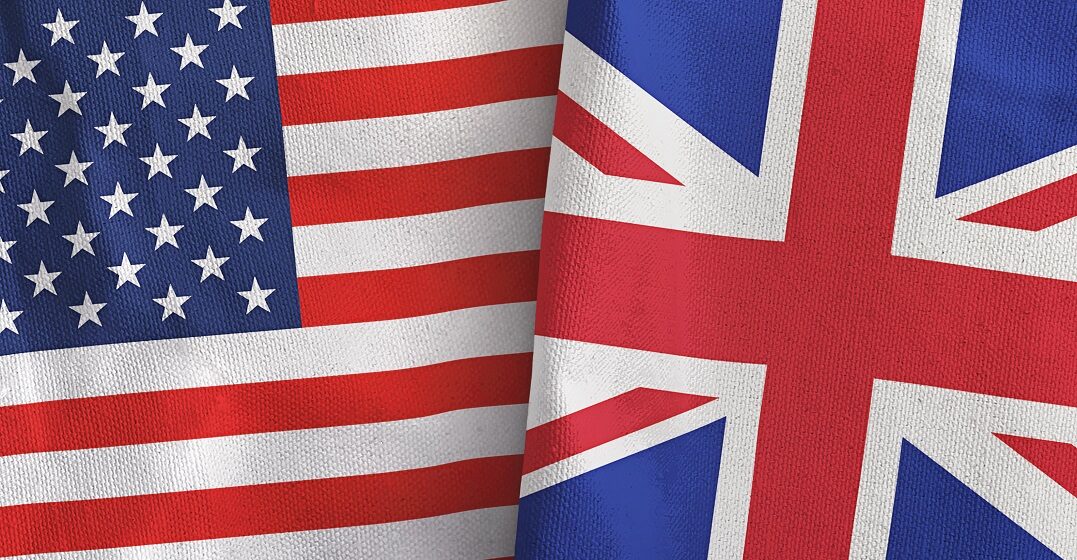
Patriotism is expressed very differently in the UK and the US. Unless there is a game of soccer (or “football,” if you favor the English term), you’re unlikely to see people wearing a t-shirt with the British flag on it in the UK. The Union Jack is also much less likely to fly proudly outside British homes than the Stars and Stripes is in the USA. In fact, this may even be frowned upon, as it may be linked to certain political trends among the extreme right wing of British politics. It’s also telling that contrary to the celebrations of Independence Day in the US, there is no official national day in the United Kingdom.
4. Pub culture is a real thing in Great Britain
Social life in the UK often revolves around pubs in a way that can feel unfamiliar to Americans.
Much more than a place to toss back a drink or two, British pubs remain a staple of social life in the UK. Every area has at least one pub where locals can meet to watch a game, play pool, listen to a band or take part in a pub quiz. On a Sunday, you can go for lunch with your family to enjoy the famous Sunday roast. During the week, it’s not rare for colleagues to go for a drink at the end of the working day.
5. Driving habits are different in the US vs. UK
Daily habits like transportation also highlight differences between the UK and the US. One of the most enduring American habits is to drive just about anywhere, no matter how short the distance. But in the UK, as in pretty much everywhere in Europe, you’ll walk rather than take the car if you only need to travel a few blocks. Drive-thrus are also much more rare in the UK than in the US. In big cities like London, it’s fairly common to forgo a car entirely, as public transportation and taxis are widely used. If you do take your car, don’t forget that people drive on the left side in the UK.

Learn English with Lingoda
How it works

Anne-Lise Vassoille
Anne-Lise is a translator and copywriter working for various industries... Settled down in London, she cannot get enough of the exceptional cultural life in the English capital city, starting with theater, be it to see a new West End show or to roll up her sleeves with her amateur drama group. She is also interested in photography, as her Instagram profile shows. She indulges her passion for languages in a translation blog she writes with other linguist friends. Go to her Linkedin page to know more about her background and her professional experience.